What a pre-sell page is
A pre-sell page is a landing page whose job is not to sell, but to prepare the visitor for the page that does. It sits between the ad and the offer. The names vary: presell page, prelander (also written pre-lander), bridge page and advertorial are used for the same idea, and an advertorial is its most common form.
Why some products need one
Visitors from search ads usually know what they want. Visitors from social feeds and native ad networks often do not: they clicked because a headline described their problem, not because they were shopping. Sending them straight to a product page asks them to make a decision they are not ready for.
A pre-sell page gives them the missing context. It is most useful when:
- The product solves a problem people do not connect with a product yet.
- It works differently from what people are used to, and that difference is the reason to buy.
- The price is higher than the obvious alternative and needs explaining.
- The ad itself cannot carry the claims, because of length limits or ad platform policies.
What goes on a pre-sell page
- A headline that continues the ad. Same promise, same words where possible, so the visitor knows they are in the right place.
- The problem, explained. Causes, consequences and why the usual fixes fall short.
- A new way to think about it. The idea that makes your product the logical answer.
- The product, with evidence. What it is, how it works, and proof you can support.
- Answers to the obvious doubts. Price, effort, guarantees and returns.
- One link to the offer. Every button goes to the same product page or checkout.
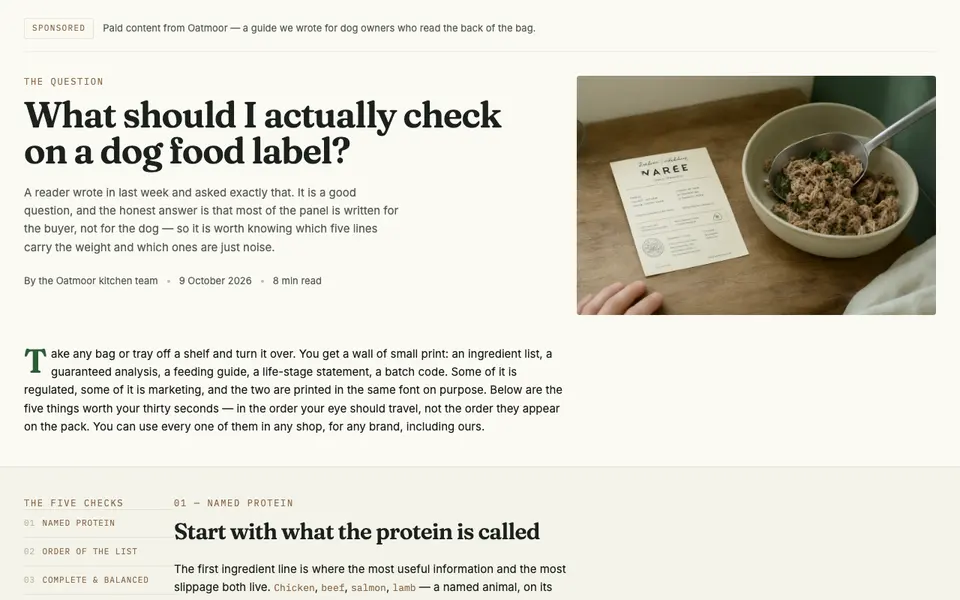
In this example the reader learns five things to check on any dog food label. The last section applies the same five checks to the product being sold. The guide stays useful whether or not the reader buys, and the product is judged by criteria the reader has just accepted.
Common pre-sell formats
| Format | What it does |
|---|---|
| Advertorial article | Explains the problem in editorial form, then introduces the product. |
| Listicle | Several reasons or signs, each short, with the product as one of them or the conclusion. |
| Buying guide | Gives the reader criteria for choosing, which your product meets. |
| Comparison | Puts the product next to the familiar alternative and explains the difference. |
| Story | A founder’s or a customer’s experience with the problem and the product. |
The format matters less than the fit with the ad. A listicle ad should land on a listicle; a question in the ad should be answered in the headline. For a prelander example in each of these formats, see advertorial examples.
Prelanders for ecommerce stores
For an online store, the prelander usually sits between a social or native ad and one product page in the store. The store stays as it is; the prelander is a separate page, for example on a subdomain of the store’s domain, and every button on it links to that one product.
- One product per prelander. A page that explains one problem should lead to the one product that answers it, not to a collection or the home page.
- The product page has to match. The price, offer and product name the reader saw on the prelander should be exactly what they find in the store.
- Keep campaign parameters on the link to the product page, so store sales can be traced back to the ad and the prelander.
- Skip it for best-sellers people already search for by name; send that traffic straight to the product page.
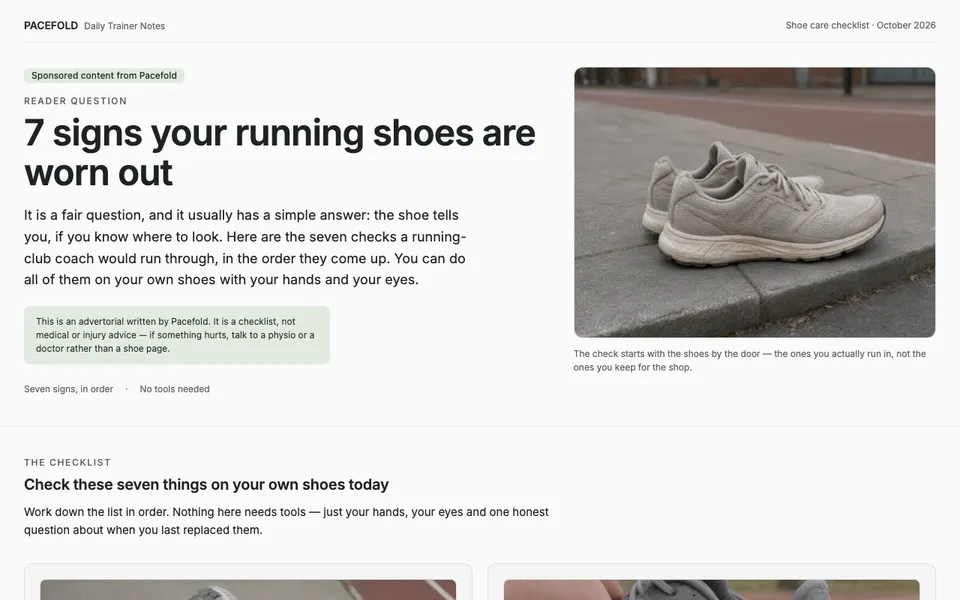
When to skip the pre-sell page
- Visitors searched for your brand or product by name.
- They come from retargeting and have already seen the product page.
- The product is simple and familiar, and the offer itself is the message (a sale, a restock, a new colour).
- You are running a time-limited campaign where speed to the offer matters more than explanation.
How to tell whether it is working
A pre-sell page earns its place only if more people end up buying than without it. Watch two numbers: the share of visitors who click through to the offer, and the conversion rate of those who arrive at the offer from the pre-sell page. Compare both with sending the same ads straight to the product page.
If few visitors click through, the page is not delivering what the ad promised. If many click through but few buy, the page is promising something the product page does not show.